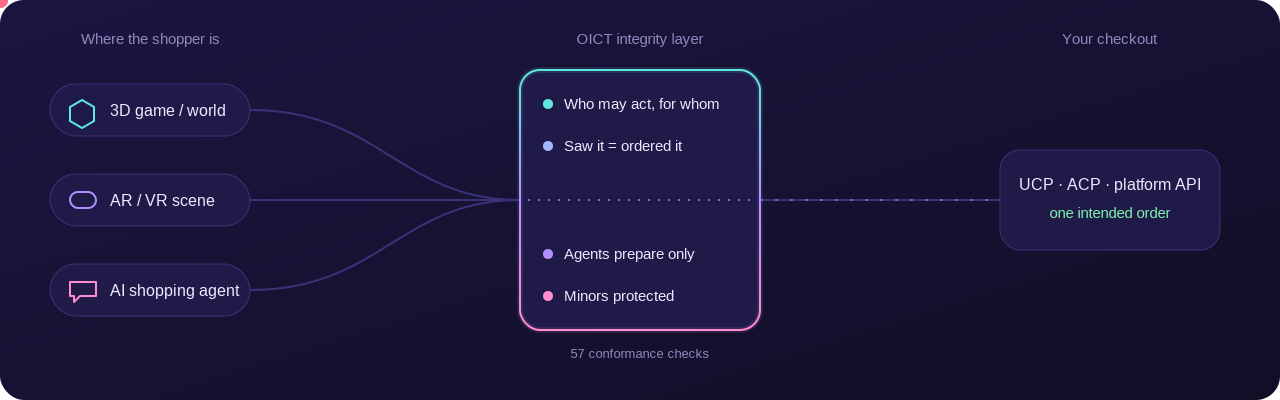
OICT is an open transaction-integrity layer for real-world purchases made inside games, 3D worlds, AR/VR and AI shopping agents. It sits on top of the checkout you already use and makes sure every order matches a fresh, specific confirmation from the person paying.
You are the shopper, the merchant, a flaky network and an over-eager AI helper. Every rule runs in your browser with synthetic data.
Pick a variant in the scene
As the shopper
Make something go wrong
0orders placed0unintended orders0requests blocked
What OICT decided
Pick a variant, tap Buy, then try one of the things that go wrong.
Four rules, enforced where the order is created
OICT does not replace catalogs, checkout or payment. It adds the rules that existing protocols leave to each team, and turns each one into a test anyone can run.
Who may act, for whom
Platform, developer, application, merchant, consumer and agent form one explicit chain. Authority starts with the consumer, can only narrow when delegated, and disappears everywhere when revoked. Every call proves who it is with a signed token; a grant id alone buys nothing.
MPA-1…8 · DLG-1…5 · REV-1…5
Saw it, ordered it
Every change in the scene bumps a state version. A confirmation is a signed record of exactly what was on screen, lives two minutes, and is checked again when the order is placed. Anyone can verify it with the published keys.
STB-1…10
Agents prepare, people decide
An AI helper can draft a cart for the state it actually saw. It can never hold the right to place an order, even with a valid confirmation in hand.
AGT-1…5
Minors protected by default
Under-13 accounts cannot authorize physical purchases. Teen purchases above a merchant-set limit, and any agent acting for a teen, need a guardian consent reference.
MIN-1…4
A thin layer on top of the checkout you already have
Requests from 3D scenes, AR/VR and AI agents pass through OICT before your commerce protocol creates an order. Good requests pass untouched; stale or overreaching ones stop with a stable error code your interface can explain.
Proof you can run, not a promise
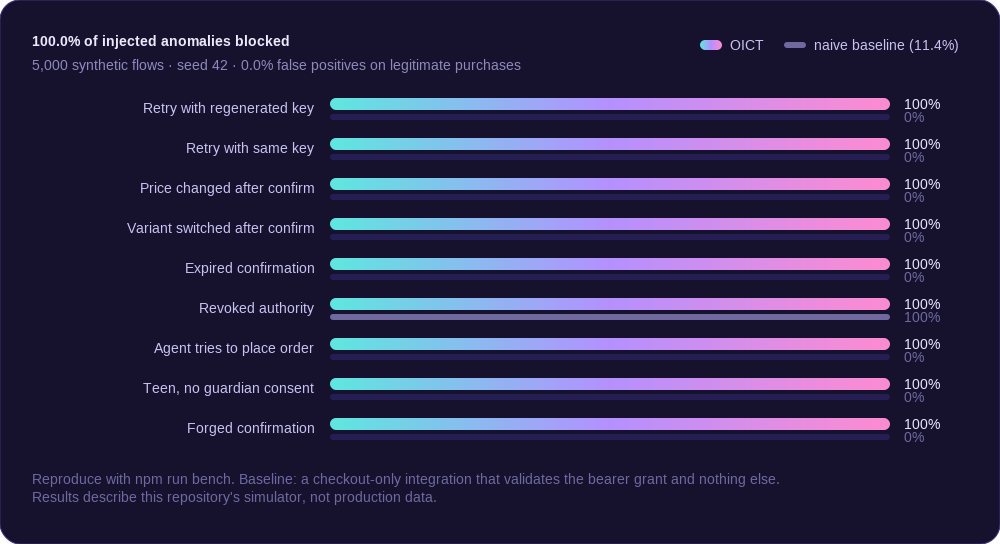
The conformance suite checks any implementation over HTTP. The benchmark injects nine kinds of anomaly into thousands of synthetic purchases and counts what gets through.
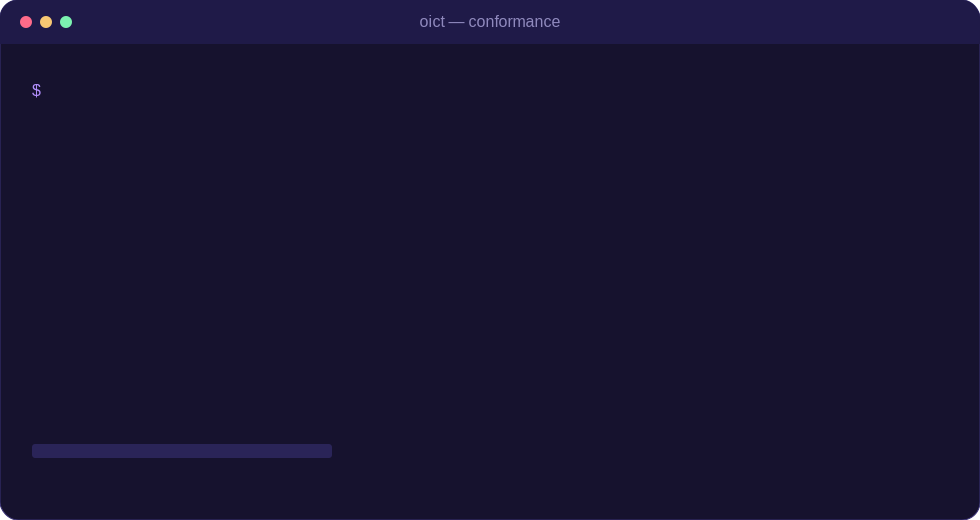
npm run conformance -- --compactnpm run bench (5,000 synthetic flows, seed 42)
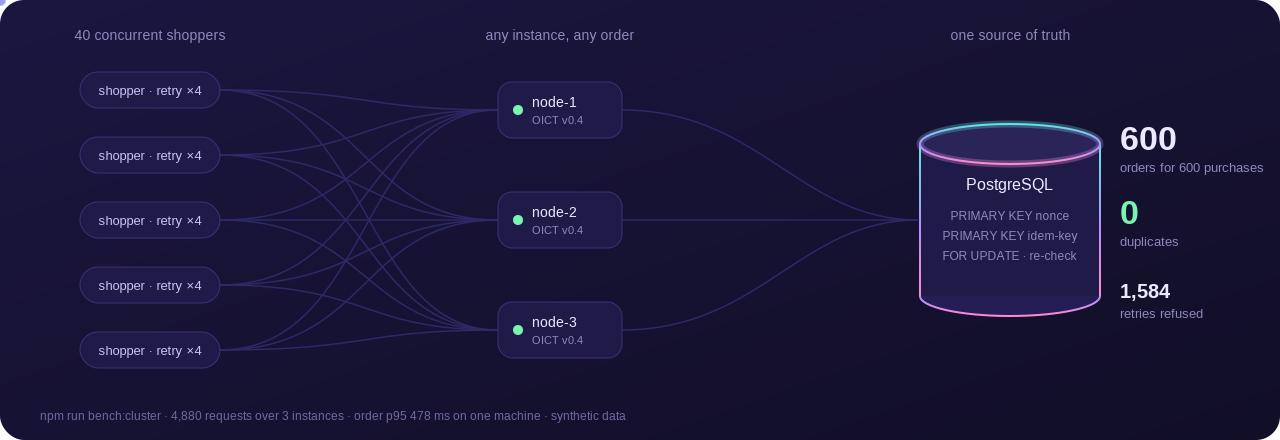
Many instances, one source of truth
Run any number of OICT instances on one PostgreSQL database. Primary keys, row locks and single-statement updates enforce the duplicate-purchase and state-binding rules, so a retry that lands on a different instance is still refused.
npm run bench:cluster (3 instances, 40 concurrent shoppers, every order sent four times)
Run it in under a minute
Node.js 22.18 or newer runs the TypeScript sources directly. Nothing to install.
$ git clone https://github.com/popcorn8912/oict && cd oict
$ npm run demo # narrated walkthrough$ npm run conformance # 57 checks against the reference server$ npm run bench # anomaly-injection benchmark# test your own service$ node conformance/cli.ts --target https://your-staging-host --json report.json